 zhengfan@ucanrobot.com
 Click to WhatsApp (Michael Zheng)

For shaft and disc components used in CNC machine tool electric spindles, quality control goes beyond dimensional accuracy. We focus on functional performance, specifically dynamic balance, bearing seat precision, and thermal stability, leveraging our advanced equipment:
1. Bearing Seat Precision and Surface Integrity
The bearing seats on the shaft are critical for spindle life and runout.
- Grinding for Form Accuracy: We utilize our Klingelnberg internal and external cylindrical grinders (6 units). These machines achieve a roundness accuracy of < 0.5μm. This ensures the bearing fits perfectly, minimizing vibration and heat generation during high-speed operation.
- Surface Finish Control: For high-speed spindles, surface roughness directly affects friction and heat. We control the surface roughness (Ra) of the bearing seats to < 0.2μm using fine grinding and super-finishing processes.
2. Dynamic Balance and Vibration Control
Unbalance in the rotor (shaft and discs) is a major source of spindle vibration.
- Precision Machining for Balance: We use our DMG 5-axis CNC machines (2 units) and Mazak CNC lathes (10 units) to machine balance correction features directly onto the components. This allows for precise material removal during the final balancing stage.
- Balancing Tolerance: We strictly control the unbalance amount to meet G2.5 or G1.0 quality grades (per ISO 1940), ensuring smooth operation even at speeds exceeding 20,000 RPM.
3. Thermal Stability and Pre-Loading
Thermal growth can change bearing pre-load and affect spindle accuracy.
- Temperature-Controlled Machining: We machine the preload spacers and shaft shoulders with high precision using our Okamoto and Fuyu surface grinders (17 units combined). We control the parallelism of these faces to < 0.002mm, ensuring consistent pre-load under thermal expansion.
- Thermal Compensation: During machining, we monitor ambient and machine temperatures. For long shafts, we apply thermal growth compensation in the CNC program to maintain dimensional stability.
4. Assembly Simulation and Interference Fit Control
Proper interference fit between the rotor and stator is vital.
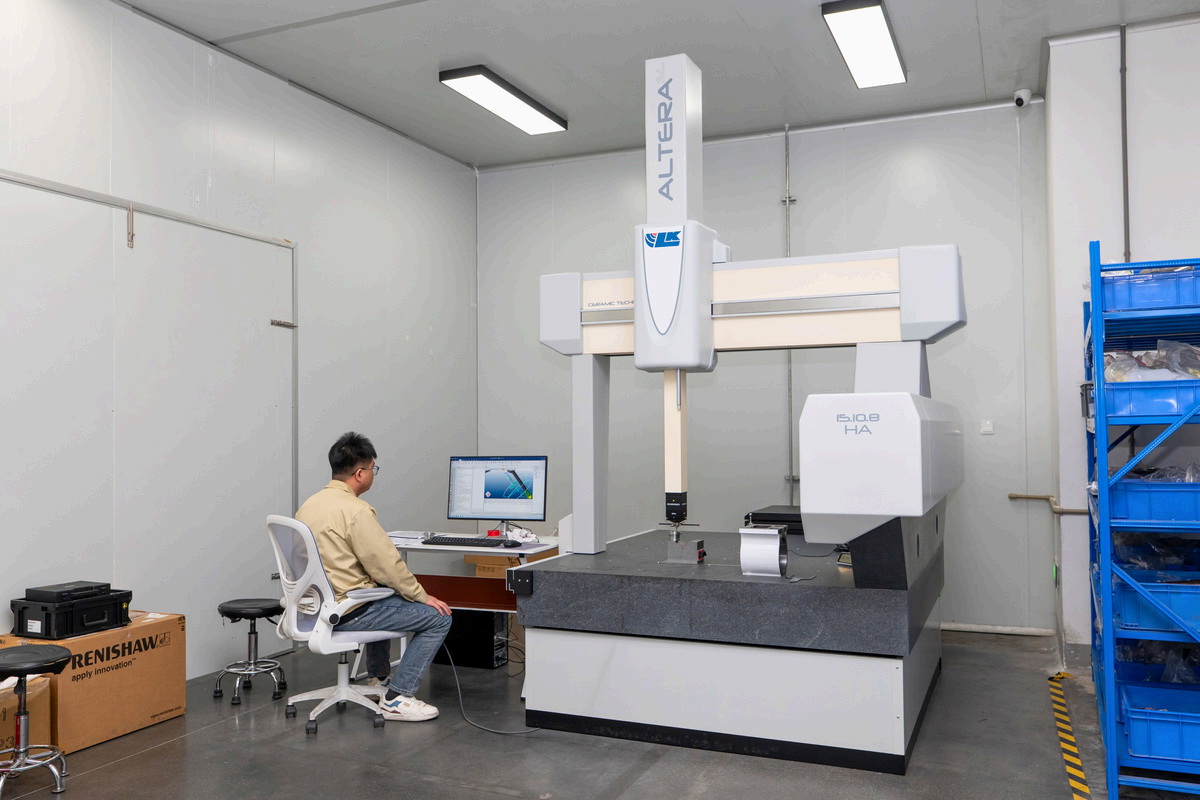
- Interference Fit Management: We precisely control the diametral interference between the shaft and the stator stack using our precision measuring instruments. The fit is maintained within +0.005mm to +0.015mm to ensure torque transmission without causing excessive stress or deformation.
- Runout Verification: After simulated assembly (or actual assembly), we measure the total indicated runout (TIR) of the tool taper or nose. We ensure this is < 0.003mm to guarantee the cutting tool runs true.
5. Process Monitoring and Traceability
We implement strict process monitoring to ensure consistency.
- In-Process Gauging: On critical operations, we use in-process probing (available on our DMG and Mazak machines) to measure features and automatically compensate for tool wear. This keeps the process capability index (Cpk) > 1.67.
- Full Traceability: We maintain complete traceability for each spindle component, recording all machining parameters, tool life, and inspection data. This allows us to trace any potential issue back to its source and ensure consistent quality across batches.
By combining our advanced equipment with these rigorous quality control measures, we ensure that our shaft and disc components meet the highest standards required for high-performance electric spindles.